customer story
Winning in a dominated market
+3000% qualified leads, -90% CAC, +200% MRR
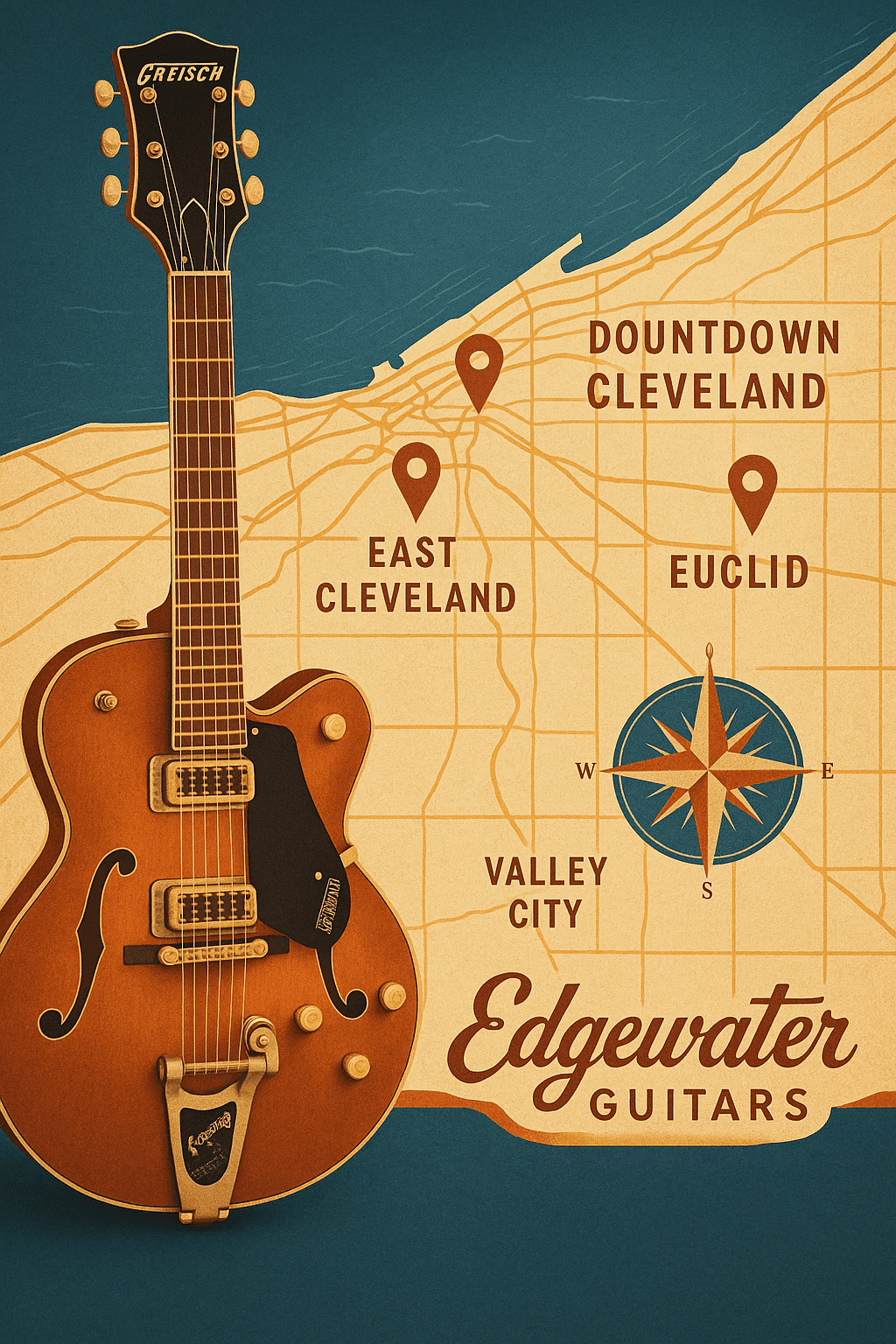

“We were competing against much bigger players and burning money on ads. Now inbound leads are consistent and profitable.”
Steve
Founder, Edgewater Guitars
Edgewater Guitars is a vintage guitar buyer competing against national incumbents that controlled most search demand. By focusing on trust, depth, and asymmetric positioning, the business built a profitable inbound engine without relying on heavy ad spend.
How a Vintage Guitar Buyer Entered a Dominated Market and Built a Profitable Organic Lead Engine
Industry: Vintage Guitar Buying & Resale
Stage at engagement: Established local operator competing against national incumbents
Engagement length: Ongoing (initial inflection in first 90 days)
Role: Fractional Marketing Leadership
THE OUTCOME
From invisible to competitive in a market controlled by incumbents
2 website conversions in the prior year → 20+ qualified leads in the first week
100% organic lead generation during launch window
90% reduction in cost-per-click on paid search
First-page rankings across dozens of high-intent searches
Consistent, profitable months replacing “barely breaking even”
This wasn’t about outspending competitors.
It was about changing the terms of competition.
THE CONTEXT
Steve Pedone ran a legitimate, experience-driven vintage guitar buying business.
He traveled to sellers, authenticated instruments in person, and paid fair prices. The business worked operationally.
But online, Edgewater Guitars was invisible.
The reality he faced:
Two national competitors dominated nearly all organic search traffic
Ads were expensive and barely broke even
His website had generated two customers in an entire year
What he thought the problem was:
“We need a better website.”
What he actually needed was a different market entry strategy.
THE REAL PROBLEM (DIAGNOSIS)
This wasn’t a website problem.
It was a positioning and trust asymmetry problem in a dominated market.
Competing head-to-head on generic “sell your guitar” searches was unwinnable
The incumbents relied on scale, brand familiarity, and ad spend
Edgewater had expertise — but no visible authority or differentiation
The constraint wasn’t traffic access.
It was credibility at the moment of decision.
THE STRATEGIC DECISIONS
Decision 1: Stop competing on breadth
Instead of chasing broad, high-competition keywords, we focused on depth — brand-specific, model-specific, and region-specific searches where intent was high and competition was weaker.
Decision 2: Win trust before winning traffic
In a market where sellers comparison-shop by default, conversion depends on trust — not ranking position alone.
The strategy prioritized:
Education over promotion
Transparency over hype
Human authority over corporate distance
Decision 3: Create assets competitors couldn’t easily replicate
Rather than producing generic content, we built proprietary tools and educational resources that created real utility — becoming link-worthy, reference-worthy assets instead of disposable pages.
Decision 4: Use paid media for efficiency, not dominance
Paid search was rebuilt around high-intent terms and landing-page alignment, not volume or vanity metrics.
THE LEADERSHIP ROLE (WHAT I OWNED)
As fractional marketing leadership, my role was to:
Diagnose the real constraint in a dominated market
Choose an asymmetric strategy competitors couldn’t easily copy
Define success metrics tied to profitability, not traffic alone
Design and validate the system rapidly
Transfer content and production capability back to the business
To validate strategy quickly, I led the initial build. Once traction was proven, production and expansion were progressively handed off.
THE SYSTEM BUILT (OVERVIEW)
Market Entry & Positioning
Clear differentiation around expertise, transparency, and human interaction
Simple, trust-forward selling process
Visible authority replacing anonymity
Organic Growth Engine
Brand- and model-specific SEO architecture
Regional targeting across Midwest markets
Educational content answering real seller questions
Proprietary valuation and serial-number tools driving backlinks and repeat visits
Paid Search Efficiency
Rebuilt campaigns around high-intent, low-competition terms
Tight alignment between ads, landing pages, and seller expectations
Same budget, radically improved ROI
Authority & Trust Layer
Founder-led video content
Reviews and testimonials system
Branded photography reinforcing legitimacy and professionalism
THE RESULTS
Lead generation
Before: 2 website conversions in an entire year
After: 20+ qualified leads in the first week
Ongoing: Consistent inbound flow following organic growth curve
Paid efficiency
CPC: $3.38 → $0.35
CTR: Increased to 6.42%
Cost per lead: ~$16
Budget unchanged at $20/day
Organic performance
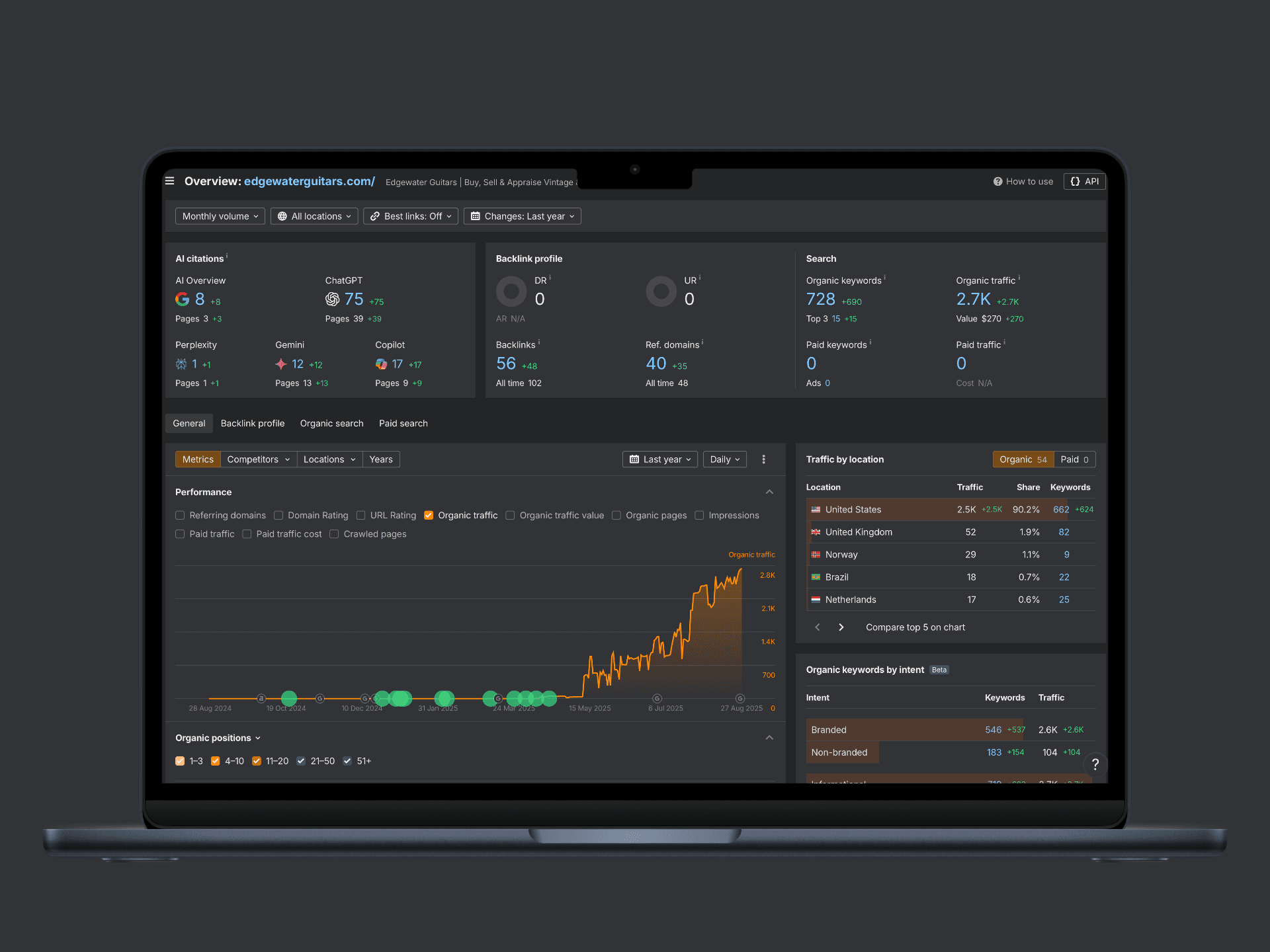
Monthly organic traffic: ~4,800 (from near zero)
Ranking keywords: 450+
First-page rankings for 47+ high-intent searches
National reach with strong regional presence
Business impact
Shift from marginal months to consistent profitability
Reduced dependence on paid acquisition
Clear competitive identity in a previously dominated market
THE SYSTEM DURABILITY
What continues working without constant involvement:
SEO content compounding over time
Proprietary tools driving traffic and backlinks
Internal content production (Steve now produces ~25%)
Efficient paid search structure
Ongoing trust signals converting new visitors
Importantly, the business avoided premature hiring:
No SEO agency
No content team
No paid media firm
Strategy was proven before scale.
THE PATTERN
This engagement followed a repeatable pattern:
Strong business model
Weak visibility
Entrenched competitors controlling obvious channels
The standard playbook fails here:
Outspend incumbents (unsustainable)
Publish generic SEO content (slow, often ineffective)
Accept limited growth (the default outcome)
What worked instead:
Depth over breadth
Utility over noise
Humanity over corporate scale
Efficiency over volume
WHY THIS WORKED
Correct diagnosis: This was a trust problem, not a traffic problem.
Asymmetric strategy: Competitors relied on scale; Edgewater relied on usefulness and expertise.
Fast validation: Strategy was proven before expanding effort.
System transfer: The business now owns the engine, not a consultant.
WHAT THIS REQUIRED
From the founder
Willingness to abandon “compete like the big guys” thinking
Commitment to showing up as the visible expert
Patience to let organic compound while ads covered short-term needs
From leadership
Market and buyer psychology insight
Experience navigating dominated competitive landscapes
Ability to design systems that scale without increasing complexity
The takeaway
Edgewater didn’t win by being louder.
They won by being more useful, more human, and more trustworthy — in a market where incumbents relied on scale and anonymity.
When competitors control the obvious channels, growth doesn’t come from trying harder.
It comes from choosing a strategy they can’t easily replicate.
Another Success Story